
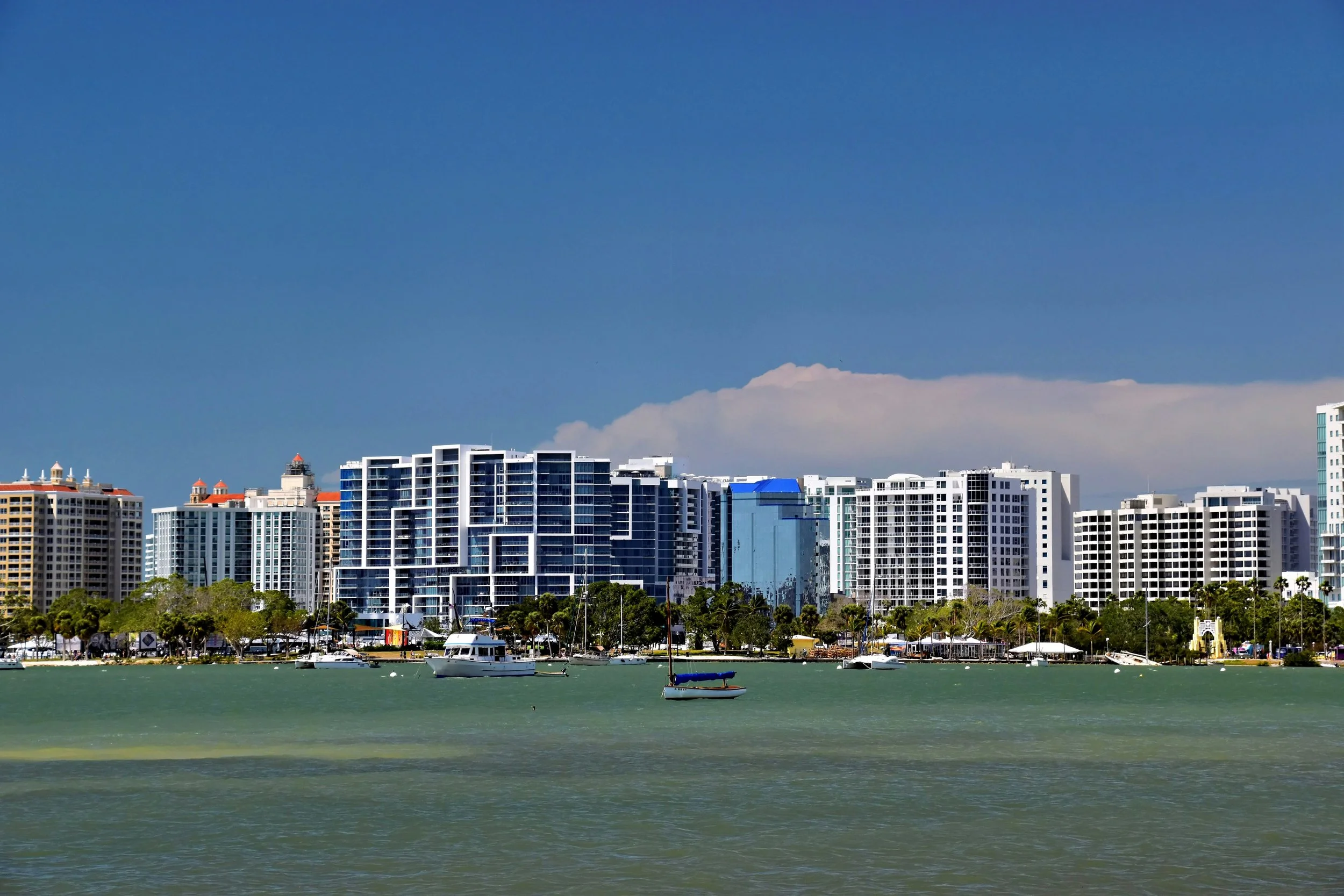
City Case Study
Rebuilding Trust through Structured Facilitation in Sarasota, Florida
Facilitation and structure as the foundation for trust and progress
Organizations Involved
The Sarasota coalition paired the City of Sarasota’s Office of Economic Development, which brought institutional authority, planning expertise, and the ability to navigate city policies, with the Amaryllis Park Neighborhood Association, a long-standing organization rooted in the Newtown area. The president of the association had years of experience organizing residents and advancing local priorities, while programmatic staff managed redevelopment functions for the city. Together they represented both municipal reach and neighborhood credibility. Their collaboration also laid the groundwork for the Newtown Business Council and its initiative, Newtown Thrives, which positioned residents to coordinate redevelopment and provide leadership in shaping revitalization.

Community Context
Sarasota is known for its strong arts and tourism economy, but some neighborhoods have seen limited investment and faced barriers to participating in planning decisions. Residents of Newtown often spoke of broken promises and past planning processes that felt superficial. In April 2024, the neighborhood received designation as a historic district, becoming the largest African American Historic District in Florida, an achievement that underscored its cultural significance and heightened the importance of building a framework to protect and guide its future. The coalition entered this context with both opportunity and risk: the opportunity to establish a genuine working relationship between the city and the neighborhood, and the risk of repeating earlier cycles of misalignment and frustration.

Type of Project
The coalition’s purpose was broader than any single project. Its goal was to establish a lasting system for collaboration between the city and neighborhood residents. The work focused on coordinated revitalization and planning across several themes, including entrepreneurship, wellness, safety, and local economic growth. While specific development opportunities were discussed, the central objective was to create a durable framework for joint decision-making that could embed community priorities into city processes and position the area to secure funding and policy support.

Alliance Interventions
Through the Alliance, Sarasota partners received structured facilitation that helped them move from tentative conversations to a functioning partnership. Facilitation provided a neutral platform where concerns could be acknowledged, and new patterns of collaboration established. Meetings were organized with clear agendas and predictable schedules. Decision-making protocols were explicitly discussed, and responsibilities were documented rather than left to assumption.
One of the most important tools was the Strategic Doing session introduced through technical assistance. This framework gave the coalition a practical method for setting goals and tracking progress, which built confidence among participants that this effort would not be another cycle of discussion without results. Partners also noted the value of the Alliance as an outside presence, creating accountability and offering a structure that both the city and the neighborhood association could rally around.


Challenges Faced
Early on, partners encountered mismatched operating styles. The city worked within formal timelines, compliance requirements, and documentation processes, while the neighborhood association, staffed by volunteers with limited resources, emphasized responsiveness to immediate concerns. Without facilitation, these differences could have hardened into frustration.
Several deeper challenges also emerged:
Trust. Previous planning processes had left residents doubtful about long-term follow-through. Even small missteps risked setting back progress, requiring careful attention to every detail.
Capacity. More affluent neighborhoods could hire consultants or rely on professional staff to influence decisions, while Newtown residents were balancing multiple obligations. This limited the ability to sustain consistent participation.
Power sharing. Both sides needed to unlearn default habits where decision-making authority concentrated on the city side. Building awareness of these patterns and adjusting accordingly was a key step.
Pace. The city’s need for deadlines often clashed with the community’s preference for slower, relationship-based progress. Over time, both sides learned to protect the community’s pace while still meeting institutional requirements.
Concrete examples show how these differences were turned into strengths. When the city needed additional time to review zoning and permitting issues, the neighborhood association used the interval to conduct listening sessions with residents, gathering feedback that later informed planning. When the association lacked the capacity to prepare formal documentation, city staff provided technical support by drafting meeting notes and consolidating agendas. These adaptations allowed each partner to contribute where they were strongest without slowing overall progress.
Successes & Outcomes
By the six-month mark, no construction or physical redevelopment had yet begun, but the coalition had built the structure necessary for sustained collaboration. Roles were clearer, meetings were regular, and residents began noticing changes in how planning discussions were conducted. For the first time in many years, public sessions in Newtown featured city officials and neighborhood leaders presenting together, answering questions in tandem, and using shared language. At one meeting, residents stayed for two hours and closed with a standing ovation, a moment that signaled progress in building trust.
The coalition also created new structures for long-term impact. The Newtown Business Council and Newtown Thrives gave residents an institutional vehicle to coordinate redevelopment efforts. Community workshops generated a shared vision and strategies for an Action Plan, positioning the neighborhood to obtain funding and pursue policy support. The coalition’s work showed that improved processes, not just projects, can deliver lasting benefits.

Lessons Learned
The Sarasota experience demonstrates that in communities with a history of disinvestment, facilitation is not an optional add-on. It is the infrastructure that makes collaboration possible. Structured meetings, documented processes, and clear role definitions created the conditions for trust to grow and provided a foundation for progress.
Additional lessons emerged:
The right participants matter. Strong partners are not always the most visible but those who are committed to collective goals.
Language choices matter. The coalition focused on terms such as disinvestment and revitalization, which kept the conversation productive and results oriented.
Capacity must be supported. Without stipends, technical assistance, and organizational grants, residents and community-based organizations cannot sustain engagement at the level needed to influence city processes.
Do's and Don’ts
Key takeaways from the Sarasota’s coalition's experience, what helped build momentum and what to watch out for when replicating this approach in your own community.
✓ Do
Do invest in facilitation as a core part of collaboration.
Do establish explicit decision-making protocols and document roles.
Do use structured frameworks like Strategic Doing to align partners.
Do balance community pace with institutional timelines.
Do provide stipends, technical support, and grants to address capacity gaps.
Do celebrate early wins such as joint presentations to build momentum.
✗ Don't
Don’t rely on goodwill alone; structure is essential.
Don’t underestimate how fragile trust can be when there is a history of broken promises.
Don’t allow decision-making authority to default to one side without deliberate checks.
Don’t treat capacity constraints as shortcomings of the community; resourcing must be shared.
Don’t measure progress only by construction or visible projects; building sustainable processes is equally valuable.
Related Case Studies
Explore More Case Studies
See how other communities build their alliances.